
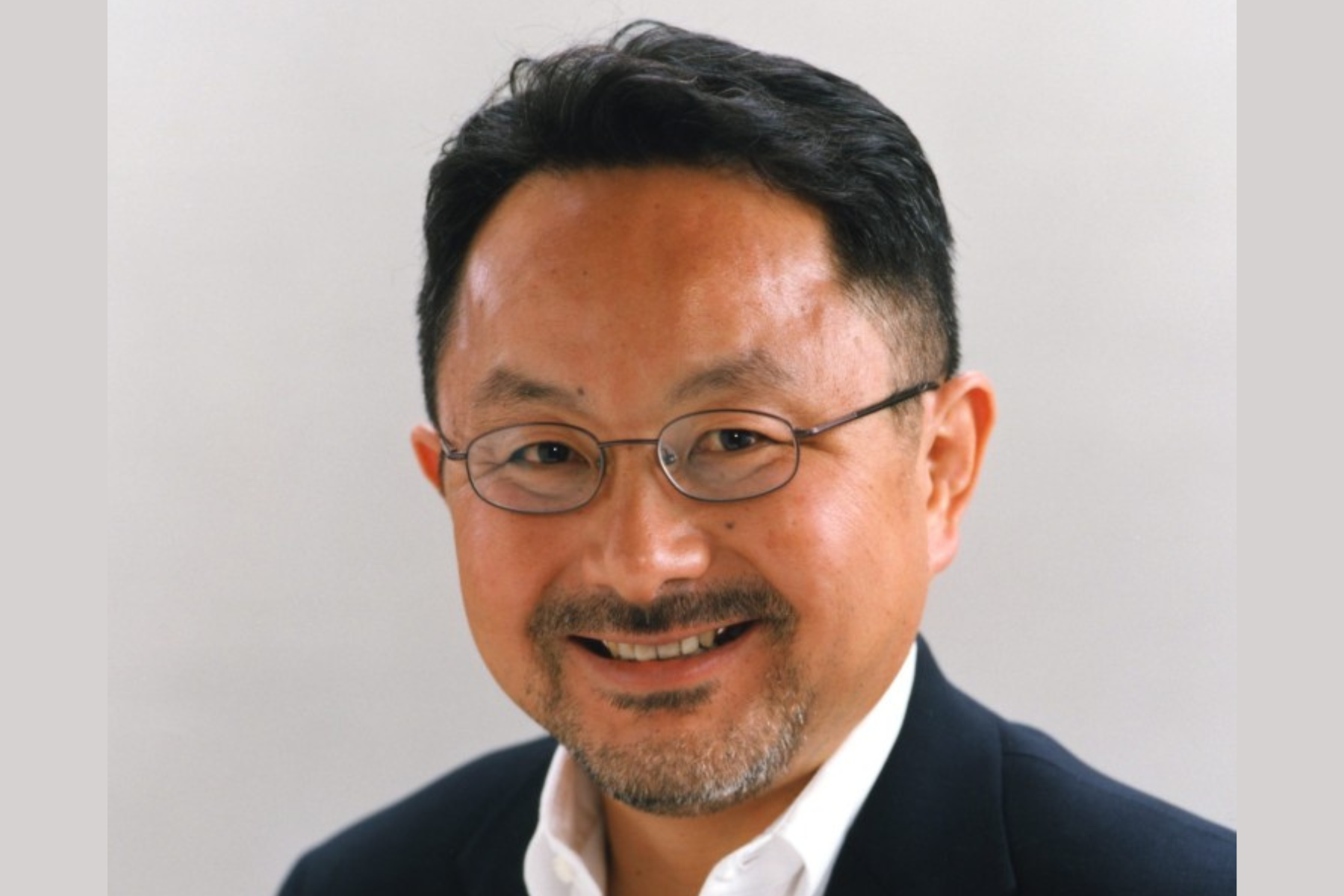
Shinobu Kitayama Named New Director of the Research Center for Group Dynamics
July 15, 2026
The Institute for Social Research has announced that Shinobu Kitayama will serve as the next director of the Research Center for Group Dynamics (RCGD), one of the nation’s premier research centers for the study of social and behavioral science.
Kitayama, the Robert B. Zajonc Collegiate Professor of Psychology and a long-time research professor in RCGD, succeeds Rich Gonzalez, who led the center for 11 years. ISR Director Kate Cagney made the announcement, noting that Kitayama “has already laid out a number of programmatic efforts that signal a creative approach to his leadership.”
Kitayama plans to continue traditions set by RCGD predecessors while leading the center into new frontiers, with a particular focus on new applications of advanced technologies in the study of social science.
“My identity as a scholar has always been closely tied to RCGD,” he said. “It is where I learned to think as a social and behavioral scientist, and I am humbled by the opportunity to build on its remarkable legacy.”
Founded in 1948 by Kurt Lewin and his colleagues, RCGD has been dedicated to advancing the understanding of human behavior in social contexts. The center’s founding questions—how systems of interdependence shape human thought, emotion, and behavior—remain at the heart of Kitayama’s vision.
“The study of group dynamics began with small groups, but the fundamental questions that inspired Kurt Lewin and the founders of RCGD remain as important as ever,” Kitayama said. “Today, advances in computational methods, network science, artificial intelligence, and neuroscience, combined with population-level data collection, allow us to investigate these same questions at the scale of communities, institutions, societies, and cultures.”
Kitayama envisions RCGD as a hub where scholars from many disciplines come together to understand the dynamic social and cultural processes that shape human behavior and flourishing. He plans to build on the center’s long-standing strengths in health, social relations, aggression, and group processes while opening new avenues for collaboration across the University of Michigan.
One of ISR’s five research centers, RCGD is known for conducting foundational social science with innovative, real-world research applications. It has been an incubator for major ideas in social psychology—including behavior change, cognitive dissonance, and network analysis– while advancing a broad array of scholarship across cultural psychology, evolutionary anthropology, political psychology, stereotyping and social judgment, communication, climate change, health disparities, violence and aggression, and systemic racism. Signature projects, such as the Aggression Research Group, the Brain CaNDY Lab, the Program for Research on Black Americans (PRBA), the Research to Practice Lab, the Dogon Longitudinal Study, MCUAAAR, and MCCFAD, reflect a strong commitment to socially consequential research that addresses urgent public problems.
RCGD’s strengths are further amplified by its sophisticated research infrastructure, including the U-M HomeLab, the ISR VR Lab, and simulation spaces with biosensor capabilities that comprise the U-M Research Core known as the Zajonc Laboratories. These facilities also offer staff support for study design, data management, IRB processes, participant recruitment, and research dissemination. These resources make RCGD a hub where rigorous theory, methodological innovation, and public impact are deeply integrated.
As an early step, Kitayama will organize an RCGD speaker series next winter to stimulate conversations around computational methods in social science. The fall series, organized by Kristine Ajrouch and Sela Panapasa, will present global perspectives on culture and health.
Kitayama brings to the role a distinguished career in cultural psychology and broad recognition across the behavioral sciences. His seminal 1991 paper “Culture and the Self,” co-authored with Hazel Markus, is considered a foundational work in socio-cultural psychology. His research on cultural differences and similarities in cognition, emotion, and motivation has earned him numerous honors, including the American Psychological Foundation’s 2024 Gold Medal Award for Impact in Psychology, the Distinguished Scientific Contributions Award from the American Psychological Association, and the William James Fellow Award from the Association for Psychological Science. He also served as president of the Association for Psychological Science from 2020 to 2021. Currently, he is leading the Federation of Associations of Behavioral and Brain Sciences.
“RCGD has always renewed itself by taking up its foundational questions with new tools,” said Gonzalez. “I am pleased that Shinobu will lead the next renewal.”
Cagney expressed deep appreciation for Gonzalez’s service as RCGD director. “Under Rich’s leadership, the center has continued to thrive as a home for interdisciplinary research and one rooted in the founding principles of RCGD,” she said. “Rich’s commitment to supporting faculty, staff, students, and research programs has made a lasting impact on RCGD and ISR as a whole.”
ISR center directors serve for up to two, five-year terms. Kitayama’s appointment will begin at the start of the fall semester, Aug. 31.