
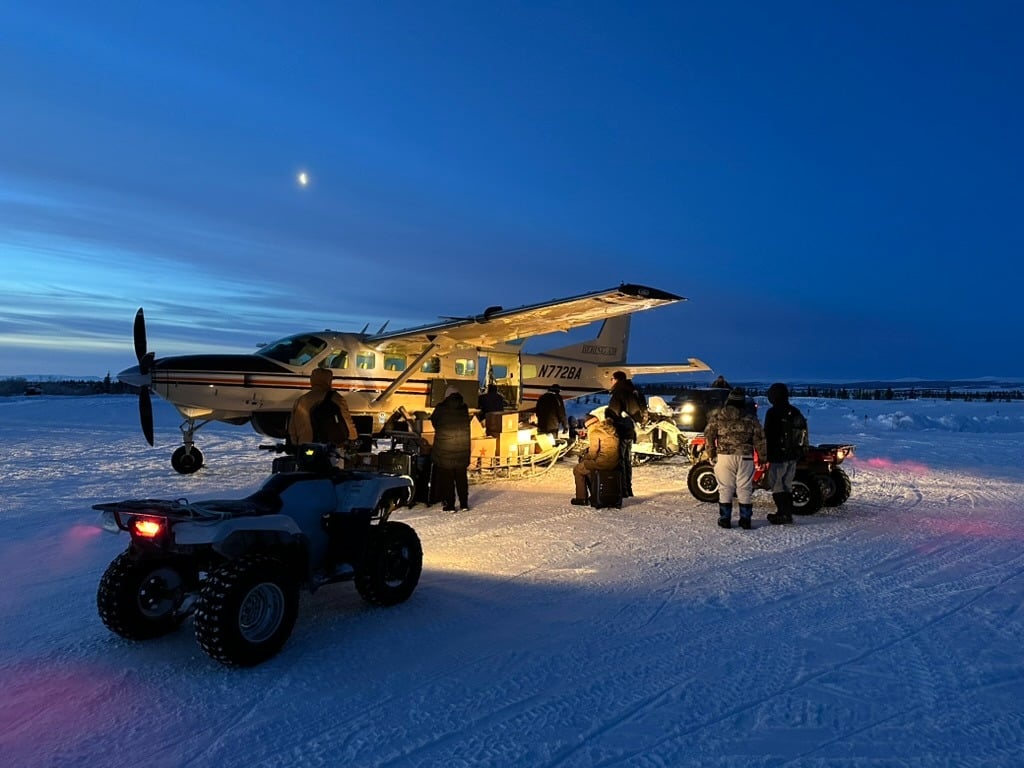
ANCHRR: A Visual History of the Alaska Native Collaborative Hub for Research on Resilience
October 20, 2025
Research efforts to address suicide have historically focused on prevention and treatment for individuals at high risk, addressing mental health and deficits that fail to address systemic problem and root causes. The Alaska Native Collaborative Hub for Research on Resilience (ANCHRR), a project that worked on building resilience in Alaska Native communities with some of the highest rates of youth suicide in the US, completed work over almost a decade to flip that paradigm. Working in 64 communities, ANCHRR ( (U19 MH113138) invited Alaska Native collaborators across the state to govern, guide, and participate in collaborative research at a large scale. Focusing on community-level strengths and protective factors, ANCHRR helped identify what communities are doing to reduce suicide risk and promote well-being, shifting the focus of investigations from individuals in crisis to that of adaptive communities supporting practices and opportunities that support Alaska Native people. Led by Stacy Rasmus, James Allen, and Lisa Wexler, the project began in 2017 and just finished in 2025 with six statewide collaborative hub meetings to shape the research done in 65 remote and rural Alaska Native communities which led to the development of a Protective Community Scale, which measures community resources, institutions and practices that are associated with reduced suicide at a community level. More specifically, the project identifies and describes how tribal governance, opportunities for young people, and continuing cultural practices create a context to support young people’s lives and futures.
I. A history of colonialism (1960s-present)
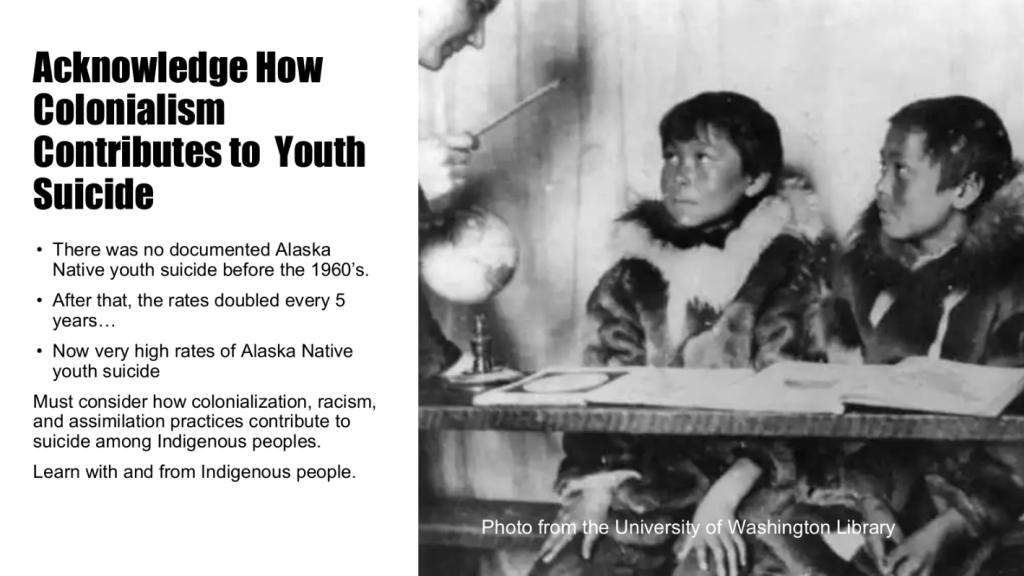
The youth suicide rates in predominantly indigenous small, rural, and remote arctic communities are disproportionately and unacceptably high. In North America, Inuit, and Alaska Native young people in some communities have suicide rates almost 20 times higher than those of other Canadian and American young people.
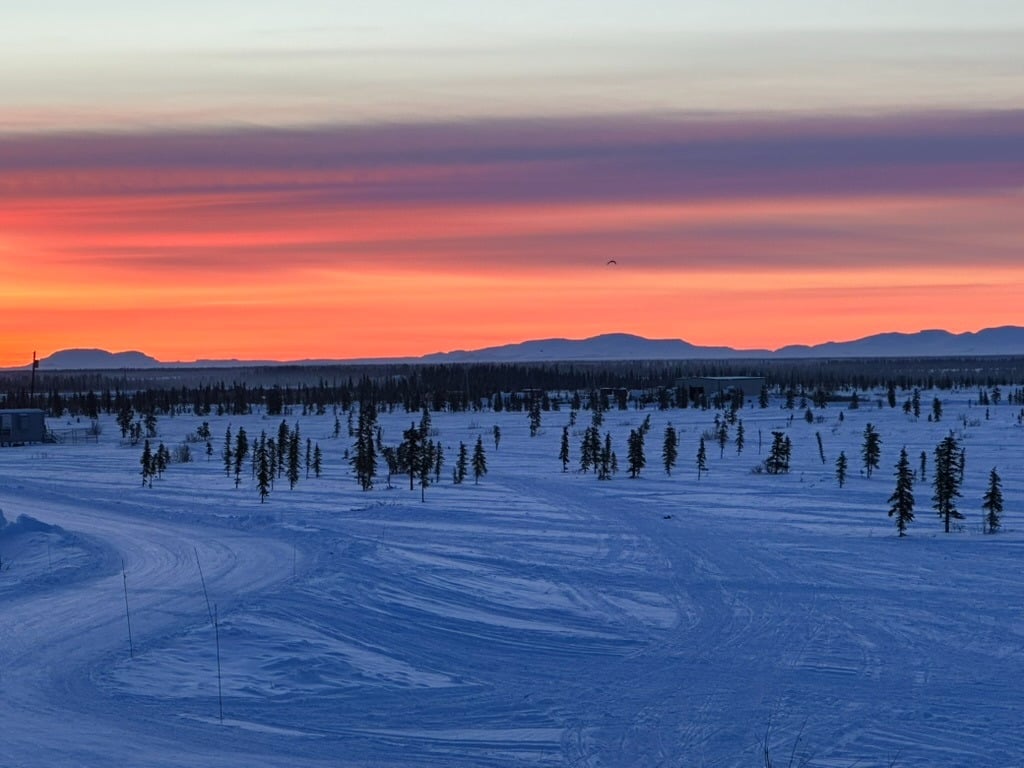
The ANCHRR project is addressing social factors that have occurred in the past century with colonization leading to social, economic, and political inequalities experienced by these communities.
“One of the important things about the work that we’re doing is that we acknowledge that colonialism is a huge factor driving youth suicide in these communities, and when we acknowledge that, it means that the research that we do to try and understand and address suicide needs to be decolonizing,” said Wexler, a research professor with the Research Center for Group Dyamics at the University of Michigan Institute for Social Research.
II. Inspiration from Canada (1998, 2008)
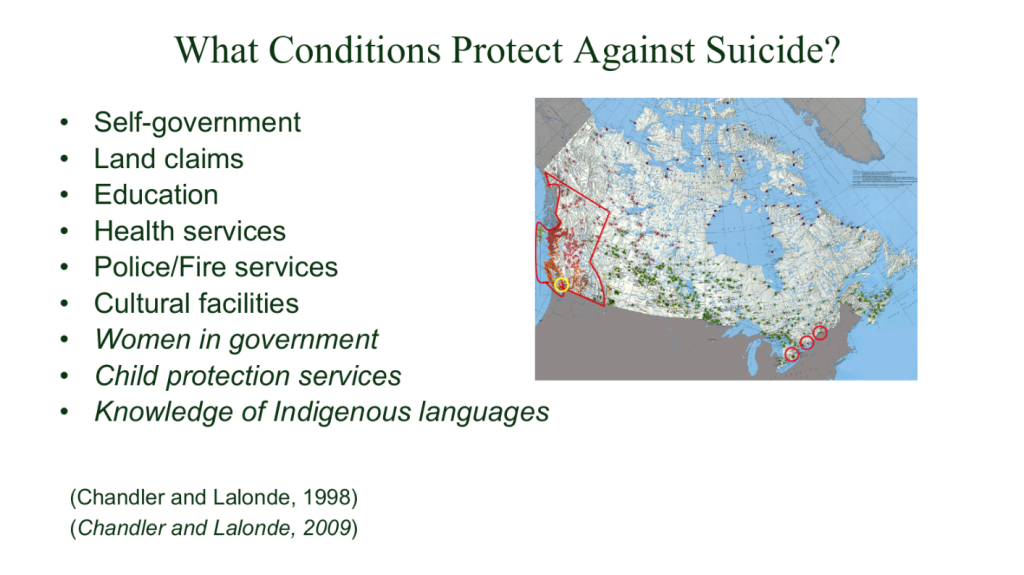
A key inspiration for the work of ANCHRR was the research work conducted by Michael Chandler and Christopher Lalonde, who broadened the scope of suicide research by studying the role of community, culture, and history in understanding Indigenous youth suicide. Their work among First Nations and Inuit communities in British Columbia in the 1990s and 2000s prompted the initiators of the ANCHRR project to consider whether their approach and findings could be replicated in the state of Alaska.
III. The Seeds of Collaboration: ANCHRR funded by NIMH (2017)
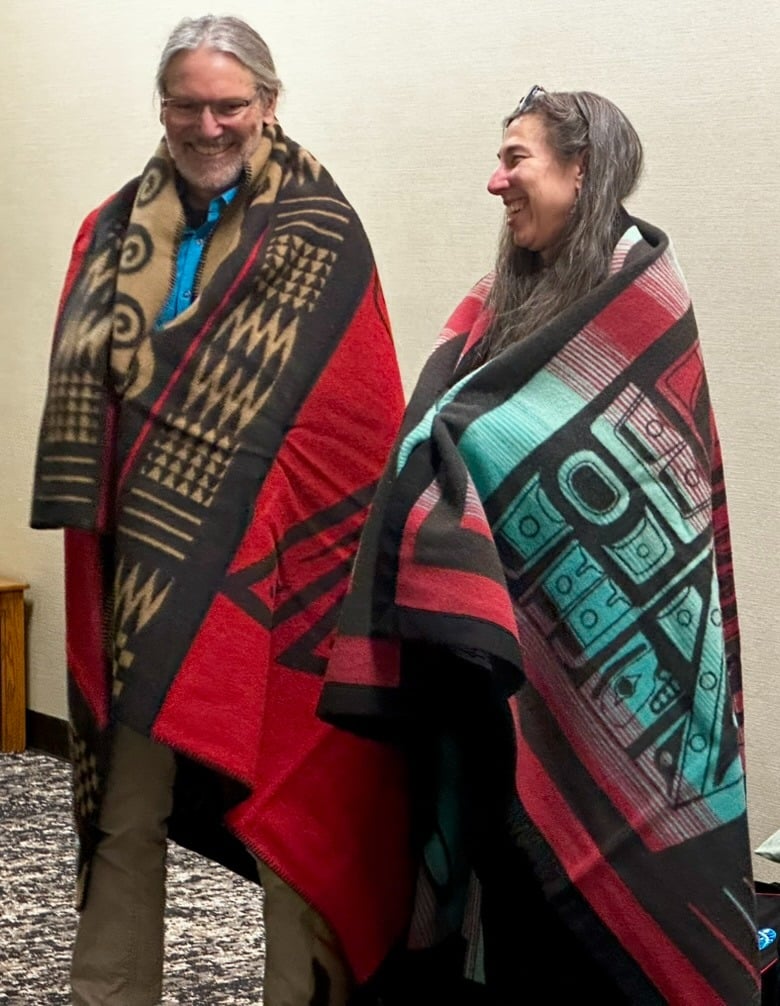
The idea for ANCHRR began as a collaboration among co-leaders Dr. Stacy Rasmus at the Center for Alaska Native Health Research at the University of Alaska Fairbanks; Dr. Lisa Wexler at the University of Michigan; and Dr. James Allen at the University of Minnesota Medical School in Duluth– beginning with the idea of building capacity across the state of Alaska. (Wexler and Allen are pictured above in an honoring ceremony).
“We wanted it to be impactful,” said Wexler. “We wanted it to be a way of translating research to practice in a way that was really celebrating strengths. …We wanted to think about how we did the research, and make sure we were doing the research in a good way. So really thinking about research as ceremony. …And we were asking, “Can we identify community-level protective processes, relationships, understandings and practices that are correlated with a reduction in youth suicide?”
ANCHRR was funded by NIMH as one of three national collaborative hubs for Indigenous suicide prevention research.
IV. Building Structure & Statewide Networks (2017–2018)
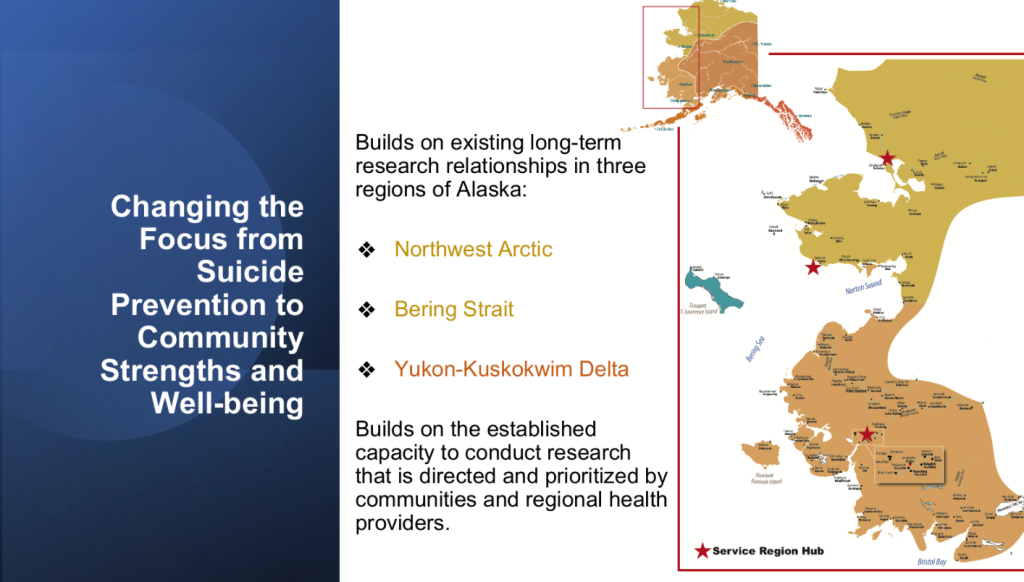
To accomplish community-based, participatory research on a large scale spanning 65 communities, ANCHRR established a leadership structure with Indigenous leaders built into all levels of the project, including its PI team, internal leadership team, a Research Steering Committee of people from remote communities in the region, meeting monthly, and an Executive Advisory Committee meeting annually with leaders like Valerie Davis, the first Alaska Native health commissioner for the state of Alaska.
V. Sharing Knowledge, Gathering Wisdom (2018–2019)
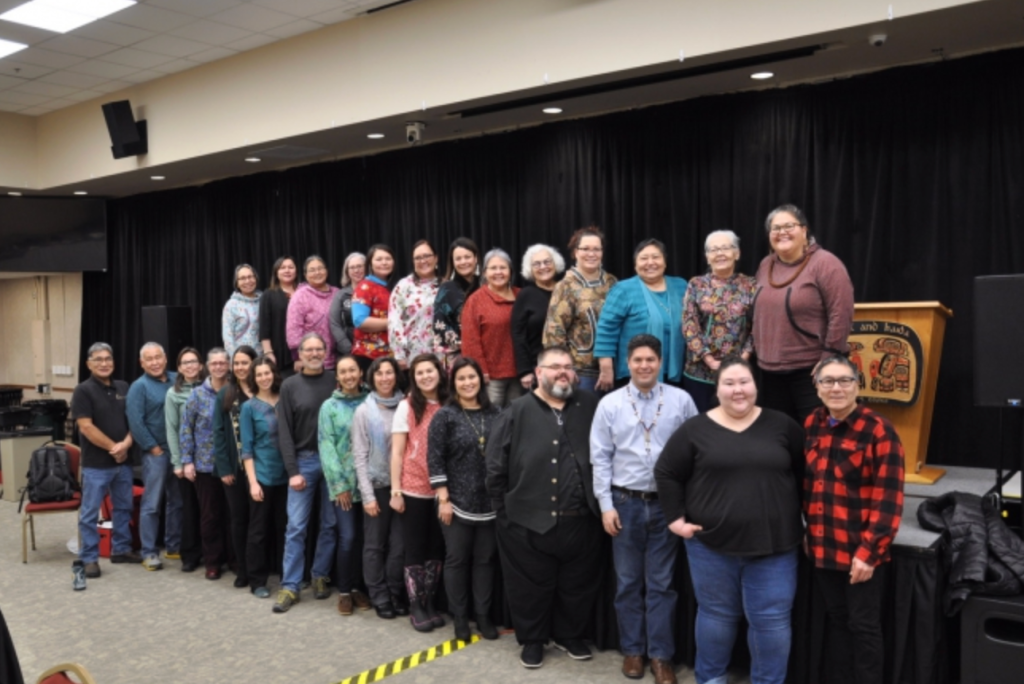
With Collaborative Hub meetings, ANCHRR partnered with local organizations to host large-scale meetings where people from across the state came to share learnings and feedback on work for suicide prevention.
The first Collaborative Hub meeting was held in Fairbanks in 2018. Stakeholders from across the state attended the next collaborative meetings in Nome in 2019, Juneau in 2020, and after the Covid pandemic these meetings were held in Anchorage in 2023 and 24, and Fairbanks in 2025. (Pictured: Participants in the 2020 Collaborative Hub meeting in Juneau, 2020).
VI. Interviews by and For Rural Alaska Native Residents (2018–2020)
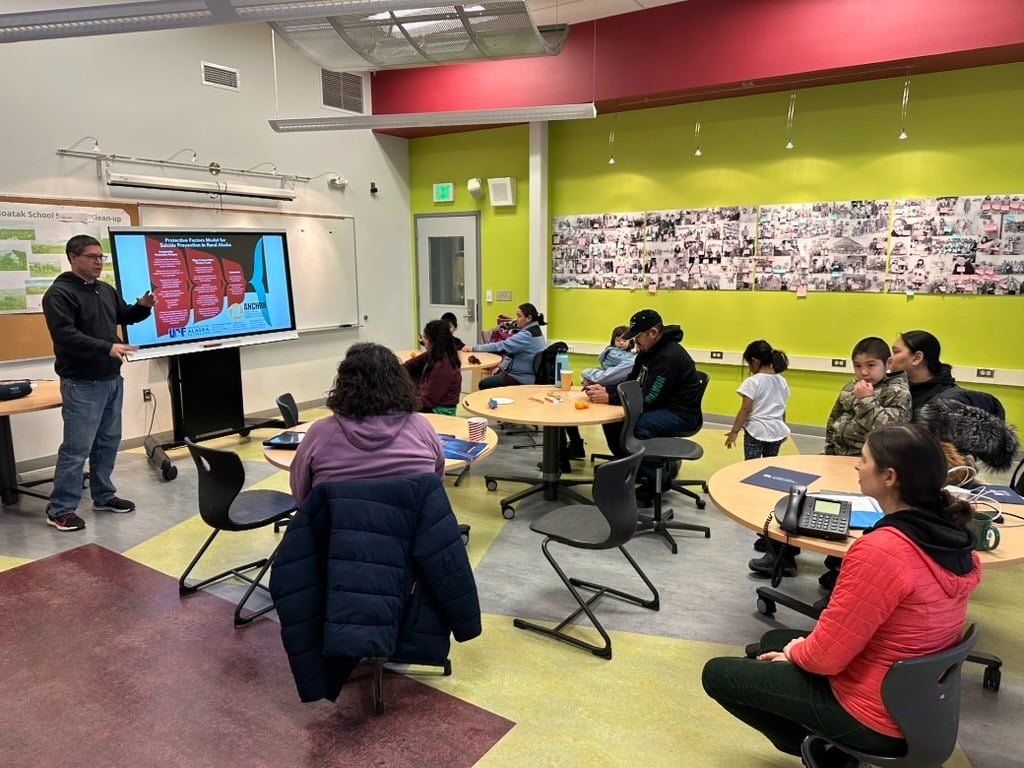
Before the pandemic years, the ANCHRR project focused on training and deploying local interviewers in partnership with the Rural Human Services program, collecting and analyzing data from 65 rural communities, sometimes in native languages, and developing its toolkit and measurement scale.
VII. Uncovering Pathways to Prevention (2023–2024)
The end of the pandemic saw the revival of in-person gatherings in five remote and rural communities with opportunities to share findings and key discoveries from the project, and doing structured interviews to find out how the community protective factors work within communities and are sustained. This qualitative data describes how community members’ beliefs, practices and institutions reinforce strengths, collaboration and good governance, which are captured in the Protective Community Scale.
Direct outcomes of ANCHRR were the development of a toolkit and a tested Protective Community Scale identifying the most important factors for determining community-level resilience for Alaska Native communities.
These factors include:
- Responsive and responsible local governance
- Youth opportunities (jobs, mentorship)
- Teaching history and culture
- Supporting both Indigenous and Christian spiritual practices
VIII. Celebration, Reflection, and Lasting Impact (2025)
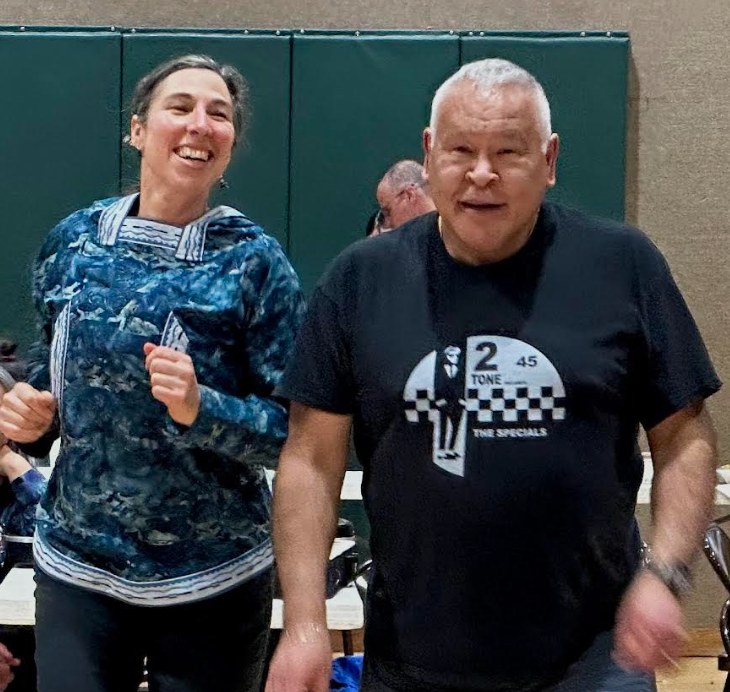
The final hub meeting included community celebration at the Effie Cochran Charter School in Faribanks, recognizing the project’s impact developing practical tools for suicide prevention, new models for building community resilience, and outreach to build capacity and resilience across Alaska. Their findings pointed the field to consider the importance of cultural continuity and community protection as key factors for preventing Indigenous suicide.
(Pictured above, Lisa Wexler dancing in celebration with Native language expert Walkie Charles).
IX. Epilogue
ANCHRR will continue to serve as a model for decolonizing research that centers Indigenous leadership and shifts the narrative in youth suicide prevention from risk to resilience. Its legacy includes community-driven tools, strengthened statewide networks, and a shift in paradigm toward community-level supports for mental wellbeing.
SOURCES:
Allen, J., Wexler, L., Apok, C. A.*, Black, J., Cueva, K., Hollingsworth, C., McEachern, D., Peter, E., Ullrich, J. S., Grogan-Kaylor, A., Lee, K., Fok, C. C. T., Berman, M., Rataj, S., ANCHRR Research Steering Committee, & Rasmus, S. (2025). Indigenous Community-Level Protective Factors in the Prevention of Suicide: Enlarging a Definition of Cultural Continuity in Rural Alaska Native Communities. Prevention Science, 1-12.
Rasmus, S., Wexler, L., White, L. A.* & Allen, J. (2024). Examining Community-Level Social Determinants of Alaska Native Suicide Risk and Protection: An Indigenous Knowledge-Informed Extension of the Legacy of Michael Chandler. Transcultural Psychiatry, 0(0) 1-18.
Wexler L, McEachern D, DiFulvio G, Smith C, Graham LF, & Dombrowski K. Creating a Community of Practice to Prevent Suicide Through Multiple Channels: Describing the Theoretical Foundations and Structured Learning of PC CARES. Int Q Community Health Educ. 2016;36(2):115-22.
Johnson, R., Wexler, L., Rasmus, S., Black, J. Peter, E., & Allen, J. Alaska Native Collaborative Hub for Research on Resilience (ANCHRR): Identifying and Supporting Community Strengths. APHA’s 2018 Annual Meeting & Expo (Nov. 10 – Nov. 14)
Wexler L. Identifying colonial discourses in Inupiat young people’s narratives as a way to understand the no future of Inupiat youth suicide. Am Indian Alsk Native Ment Health Res. 2009;16(1):1-24.