
#Nature isn’t one-size-fits-all, U-M study finds
August 3, 2026
Analysis of nearly 400,000 social media posts reveals that city parks, forests and other natural spaces inspire different emotions, activities and social connections
People often talk about “getting out into nature” as if all green spaces offer the same experience.
But a new University of Michigan study suggests that’s far from the case. Whether you’re strolling through a city park or hiking deep in a national forest can shape not only what you do, but how you feel, who you spend time with, and how you remember the experience.
Rather than asking people how they experience nature in a laboratory or survey, researchers examined nearly 400,000 real-world social media posts describing outdoor experiences across the United States.
Posts about nature were overwhelmingly positive, whether people were hiking, camping, hunting, taking photographs or simply enjoying time with family and friends.
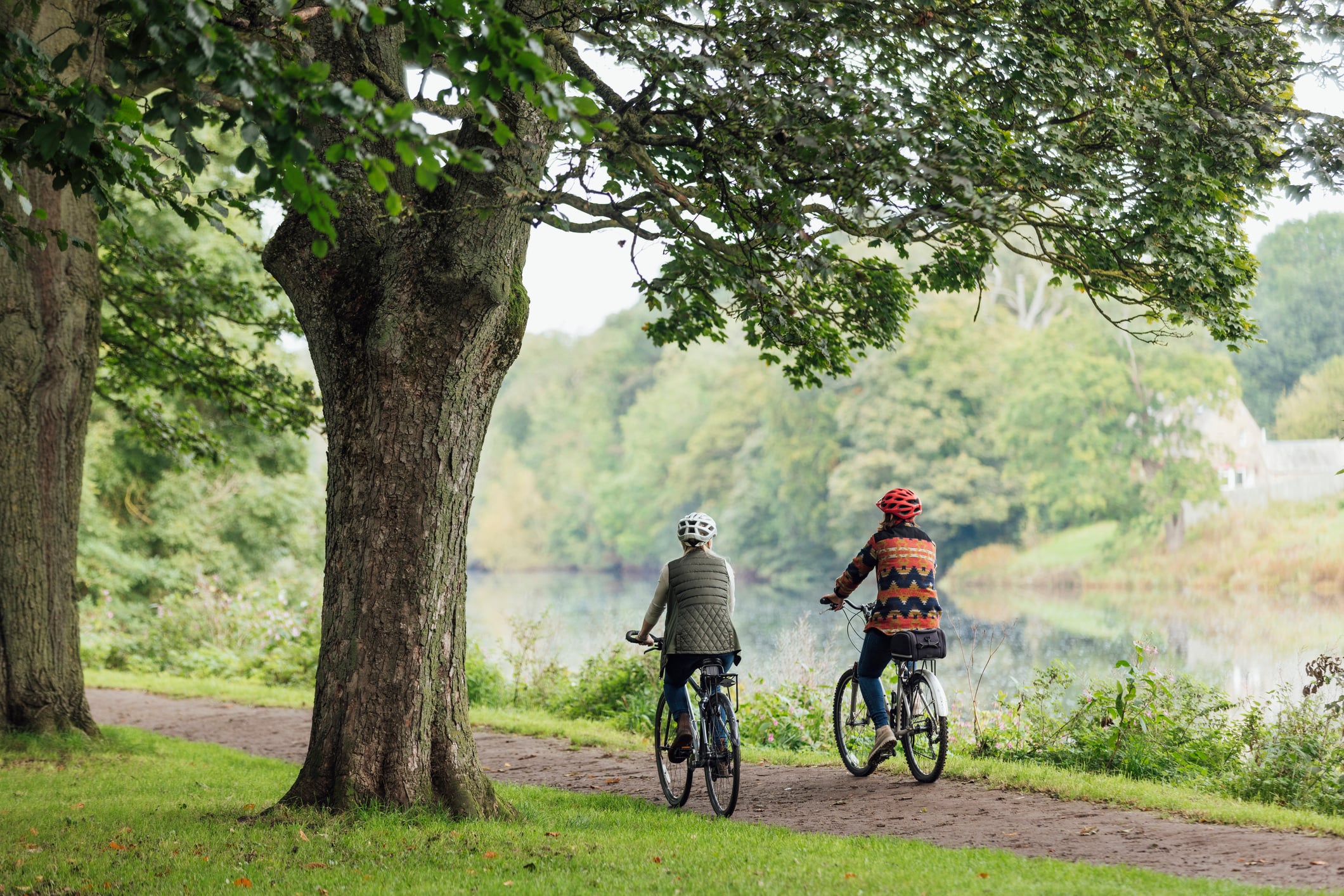
But the setting often shaped the story. City parks were more commonly linked to family outings and recreation, while rural landscapes inspired posts about adventure, camping and the popular hashtags #GetOutside and #OptOutside.
“Our findings show that nature isn’t a single, uniform experience,” said Kate Schertz, U-M psychology research fellow and first author in this federally funded study. “The psychological benefits people receive depend not only on spending time outdoors, but also on the kind of natural environment they’re experiencing.”
Schertz and colleagues used advanced text analytics to identify common themes in hundreds of thousands of posts, revealing patterns that would have been impossible to detect by reading them one at a time.
The findings add to a growing body of research showing that nature supports happiness and well-being. They also suggest that different landscapes provide different kinds of psychological experiences.
“Nature is psychologically diverse,” Schertz said. “A visit to a city park can offer something very different from a day in the wilderness, and both experiences have value.”
The research has implications for communities planning parks, conserving public lands and adapting to climate change. As urban growth and environmental change reshape the landscapes people can access, preserving a variety of natural spaces may be just as important as preserving nature itself.
“Our results remind us that access to nature isn’t simply about having green space nearby,” Schertz said. “Different environments foster different experiences, relationships and connections with the natural world.”
The findings suggest that protecting nature isn’t simply about preserving beautiful places. It’s also about preserving the many different experiences those places make possible—from a child’s first picnic in a neighborhood park to a backpacker’s weekend in the wilderness.
The study, which appeared in the journal Environment and Behavior, was co-authored by Sonya Sachdeva (U.S. Forest Service), Ethan Kross (U-M) and Marc Berman (University of Chicago).
The work was supported in part by the National Science Foundation (DGE-1746045 and S&CC-1952050) and the John Templeton Foundation.
Contact: Jared Wadley