
University of Michigan Launches 25-Year Follow-Up to Landmark National Survey of American Life
August 19, 2026
Researchers seek to reconnect with original participants to study cognitive aging and health among Americans
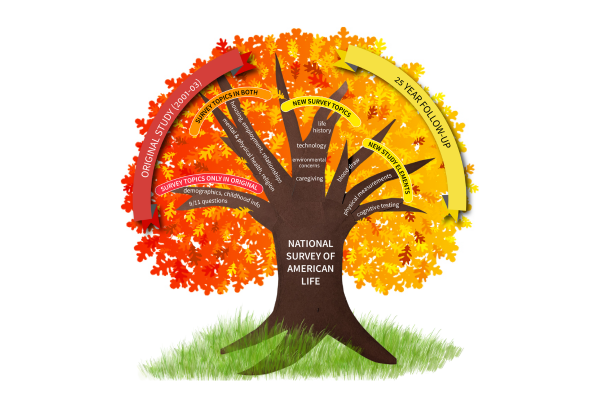
ANN ARBOR, Mich. — The University of Michigan is launching an ambitious 25-year follow-up to the National Survey of American Life (NSAL), one of the most significant studies of the health and well-being of Black Americans ever conducted. Researchers will reconnect with as many of the more than 7,000 original participants as possible to explore how their lives, health, and communities have changed over the past quarter century.
The follow-up study places particular emphasis on understanding aging as a lifelong process, with a focus on why Black Americans face a two- to four-times higher risk of dementia compared to other groups. The study introduces new elements not included in the original 2001–2003 research, including cognitive testing, physical measurements, and an optional blood draw to examine emerging biological risk factors for dementia.
“This research will provide the data we need to create policies, institutions, and programs that benefit the American public,” said Toni Antonucci, professor of psychology, senior research scientist at the Institute for Social Research, and senior advisor to the study. “Our participants’ shared experiences of life, health, and community will become part of an incredible scientific resource.”
This national initiative is starting in Michigan. Researchers will send out letters the last week of August to former NSAL participants, and interviewers will begin contacting them in September to schedule interviews.
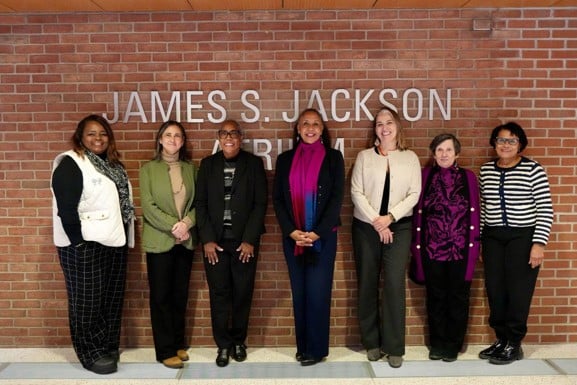
The original NSAL was led by the late Dr. James S. Jackson, one of America’s foremost social scientists and former director of the Program for Research on Black Americans, the Research Center for Group Dynamics, and the University of Michigan Institute for Social Research, where NSAL is housed. The study remains the largest nationally representative sample assessing the mental health of Black Americans and continues to be one of the most frequently cited datasets on the health of middle-aged and older Americans.
NSAL has helped unlock questions about how to help Americans thrive. For example, studies using NSAL data have illuminated how older Americans seek help; how parent education makes a difference for kids; how families, churches, and acquaintances offer support; what we know about suicidal behaviors among teens, and what activities can help with depression.
Briana Mezuk, co-director of the Center for Social Epidemiology and Population Health and co-principal investigator, underscored the critical importance of studying populations most affected by dementia.
“Our goal is to understand how to reduce the burden of dementia in America. To do that, we are focusing on a group that has elevated risk of this condition. If we can understand the factors that are driving this elevated risk, we can translate that into interventions that address them.” Mezuk said. “The NSAL is the largest nationally representative sample of Black Americans that’s ever been collected to assess health status in this group.”
Eskira Kahsay, NSAL postdoctoral fellow at the Institute for Social Research and a social epidemiologist, said she is most excited about reconnecting with the same people who made the original NSAL possible. “Each participant brings experiences that cannot be replaced, and together they reflect the lives of thousands of Black Americans across the country,” said Kahsay. “Hearing from these same survey participants after 25 years gives us a window into how life paths unfold, how challenges and opportunities shaped health, and how communities have changed over time.”
Kahsay added that the study’s new measures open critical avenues for research: “These additions allow us to ask new questions about how life stressors, neighborhood environments, and other circumstances influence cognitive aging over time. This is critically important given that Black Americans face a significant burden of dementia.”
“The NSAL 25-Year follow-up builds on Dr. Jackson’s legacy of groundbreaking research, including his earlier National Survey of Black Americans launched in 1979 that provided the first truly representative view of Black America,” said Deborah Robinson, a co-investigator and project director. Many of the researchers involved in the current follow-up learned from and were inspired by Dr. Jackson’s mentorship.
Researchers will contact original participants by phone and mail to discuss their participation in the follow-up study. Participants can earn up to $150 for their involvement in the study, and help answer questions about how to improve Americans’ health and well-being.
For more information about the original NSAL findings and the 25-year follow-up, visit the websites of the National Survey of American Life and the Program for Research on Black Americans, which is celebrating its 50th year. The Research Center for Group Dynamics is an interdisciplinary research center advancing discoveries about human behavior in social contexts.
Media Contact: Tevah Platt